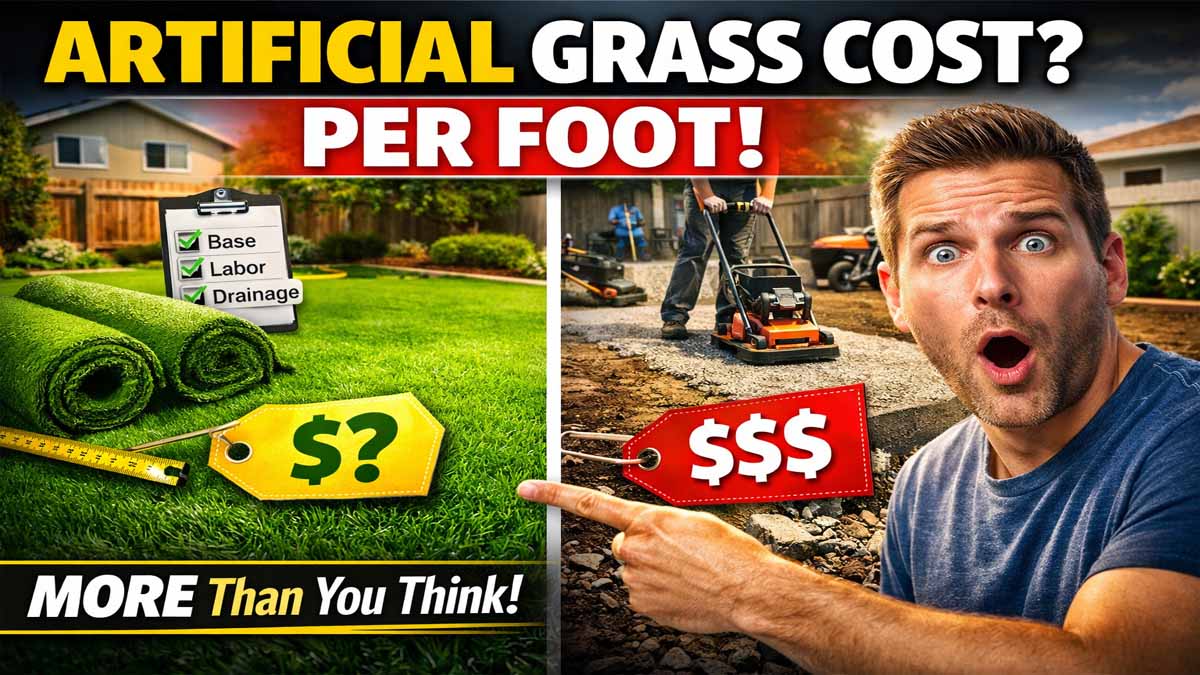
That advertised "$8 per square foot" for artificial grass is just the beginning. Most homeowners discover the real cost after installation begins. We've analyzed hundreds of U.S. installations to show you what you're actually paying for—from hidden prep work to long-term maintenance that nobody mentions upfront.
Artificial turf seems like a straightforward investment. You see a price per square foot, multiply by your lawn size, and budget accordingly. But here's what happens in reality across American homes: the final bill often exceeds initial quotes by 30-50%. The discrepancy isn't deception—it's incomplete understanding.
In 2026, with water restrictions expanding in states like California and Arizona, more homeowners are considering synthetic alternatives. Yet without understanding the full cost structure, you risk either overspending or choosing inferior materials that fail prematurely. This guide breaks down every component so you can budget accurately.
The Initial Quote Only Tells Part of the Story
When you receive that first estimate, it typically covers just the turf material itself. But installation involves multiple layers and preparation steps. Each adds cost, and some are essential for longevity. Skipping them means your artificial lawn might fail within a few years.
What's Included in Basic Quotes
Most contractors provide a per-square-foot price for the synthetic grass material. Quality ranges from $2.50 to $6.50 per square foot just for the turf. Higher-priced options typically have better drainage, UV protection, and more natural appearance. But this is where the transparency often ends.
Expert Tip: The 50% Rule
When you receive a basic quote, mentally add 50% to account for installation, base materials, and unexpected adjustments. This rough calculation aligns with actual project outcomes across U.S. regions in 2026.
The Hidden Foundation Costs
Artificial grass requires proper base preparation. This involves removing existing sod, grading the area, and installing multiple layers of compacted materials. In most U.S. markets, this preparation adds $1.50 to $3.00 per square foot. The variance depends on soil conditions and accessibility.
Complete 2026 Cost Breakdown Table
This table reflects average costs across major U.S. markets in early 2026. Prices vary by region, with coastal areas typically 15-25% higher than national averages.
| Cost Component | Price Range (per sq ft) | Notes | Often Overlooked? |
|---|---|---|---|
| Turf Material | $2.50 - $6.50 | Quality varies significantly | No |
| Base Preparation | $1.50 - $3.00 | Soil removal, grading, compaction | Yes, by 40% of homeowners |
| Drainage Layer | $0.75 - $1.50 | Essential in rainy climates | Yes, until problems occur |
| Weed Barrier | $0.25 - $0.50 | Prevents growth through seams | Sometimes omitted in bids |
| Installation Labor | $2.00 - $4.00 | Seaming, trimming, securing | No, but often underestimated |
| Infill Material | $0.50 - $1.25 | Supports blades, adds weight | Yes, 30% don't know it's needed |
| Site Specifics | $0.50 - $2.00+ | Slopes, obstacles, access issues | Almost always |
| TOTAL ESTIMATE | $8.00 - $18.75 | For a typical 500 sq ft lawn: $4,000 - $9,375 | |
The Real-Life Arizona Case Study
In Phoenix last year, a homeowner received a quote of $4,200 for 600 square feet ($7 per square foot). The final bill reached $6,900. Why? The contractor discovered rocky soil requiring special equipment, needed additional drainage for monsoon season, and the backyard access was too narrow for machinery.
This scenario repeats across the United States. Site conditions dramatically impact costs. Steep slopes need terracing. Poor drainage requires additional systems. Narrow gate access means manual labor instead of equipment. Each adds expense that initial visual inspections might miss.
Regional Variations Matter
In 2026, costs vary significantly by region. California and Northeast installations average 20% higher than the South. This reflects labor costs, permit requirements, and material transportation. However, desert regions like Nevada and Arizona have higher drainage requirements that add expense.
Long-Term Costs Most Homeowners Ignore
Artificial grass isn't maintenance-free despite common claims. You save on water and mowing, but other expenses emerge. Professional cleaning every 1-2 years costs $200-$500. Infill material settles and needs replenishment every 3-5 years. Seams may require repair.
The 10-Year Ownership Comparison
Over a decade, natural grass typically costs $3,000-$5,000 in water, fertilizer, and maintenance for an average lawn. Quality artificial grass with professional installation costs $5,000-$10,000 initially plus $1,000-$2,000 in maintenance. The break-even point usually falls between years 5-7 for most U.S. homeowners.
Common Mistake: Underestimating Heat Retention
In southern states, artificial grass can become 20-40°F hotter than natural grass. Some homeowners then install cooling systems or shade structures, adding unexpected costs not included in initial turf budgets.
Professional Installation vs. DIY Reality
DIY artificial grass installation seems appealing for cost savings. Kits cost $2-$4 per square foot. However, without proper equipment and experience, results often disappoint. Seams become visible, drainage fails, and the surface becomes uneven. Most DIY homeowners spend 25% more fixing mistakes than hiring professionals initially.
The Warranty Consideration
Professional installations typically include 8-10 year warranties on materials and workmanship. DIY projects have no warranty protection. Given that quality artificial grass should last 15-20 years, this protection matters significantly for your investment.
Frequently Asked Questions
Complete installed costs range from $8 to $19 per square foot nationally. The wide range reflects material quality, site conditions, and regional labor rates. Basic installations start around $8, while premium projects with complex sites reach $19.
Base preparation and drainage solutions. These aren't always detailed in initial quotes but are essential for longevity. In rainy climates or clay-heavy soils, drainage systems can add $1,000-$3,000 to a typical installation.
Quality residential artificial grass lasts 15-20 years with proper maintenance. Commercial grades last 8-12 years under heavy use. UV degradation is the primary limiting factor, especially in southern states with intense sun exposure.
It depends on the market. In water-restricted areas like California and Arizona, it can be a selling point. In traditional lawns regions, it may not add value and could deter some buyers. Consult local real estate professionals for your specific market.
Regular brushing to keep blades upright, debris removal, occasional rinsing, and professional deep cleaning every 1-2 years. Infill material needs replenishment every 3-5 years as it settles and decomposes.
Some municipalities offer rebates for replacing natural grass, particularly in drought-prone regions. Check with local water districts and city governments. Federal incentives are rare as of 2026, but state programs exist in California, Arizona, and Nevada.